

Mobility and the Squat
This post was written by new(ish) BBG trainer Eddie Arden
Mobility defined:
To move through a given range of motion or set of movement patterns.
Mobility is of large importance in order to move functionally not only in the gym, but also in day-to-day life. Essentially our aim when programming resisted (i.e. barbell, dumbbell, kettlebell, cable) movements is to increase the level of strength and range of motion that can be achieved. This can then transfer over into everyday life where movements (such as lifting a heavy object) can be performed safely and without experiencing pain.
It is important to note that what I am describing is not flexibility. Flexibility pertains specifically to ‘passive’ range of motion i.e. it does not take into account stability or dynamic preparedness. An example would be one of my clients who is especially flexible in the hips and yet struggles to achieve a parallel squat without losing her upright posture. Even though she has good flexibility, she struggles to achieve range of motion during a movement pattern that she is not used to, hence an overly bent back when picking things up. A general rule of thumb is that the body should be moving prior to working out (i.e. mobility drills) and static stretching (to increase flexibility) should be performed post workout.
There are three ways to improve mobility:
Self myofascial release (Bands)
- Mobility drills
- Warm up sets
To break these down: self myofascial release is basically self massage in order to release tension in soft tissue. Without getting too complicated, fascia (which surrounds our muscles and attaches to tendons) can increase in rigidity and hence reduce range of motion. In order to combat this the use of equipment such as foam rollers and softballs can be utilized in order to reduce this. I have included bands at this level as they can help improve mobility in a variety of ways (such as joint manipulation and contract relax stretching). See below for examples.
Mobility drills are essentially the performance of dynamic movements to prepare the body for heavier loads. These movements will stimulate the release of synovial fluid and increase the pliability of fascia and soft tissue. The dynamic movements can be similar in nature to the main lift and should use bodyweight/extremely light loads and be performed in a rhythmic nature. See below for examples.
Warm up sets are exactly what they say on the tin: a gradual build up of weight during the movement before moving into ‘working’ sets. Essentially this will help program in the specific movement that is going to be performed and gradually increase the intensity before the actual ‘heavy’ load that will be used.
Within this blog I am specifically going to focus on the squat movement pattern. A good way of describing how important the squat is to describe what is required to perform a full squat: thoracic (upper back) strength to keep upright during the movement, a strong lumbar (lower back) to prevent postural instability, hip mobility to achieve better depth during the squat, strong quadriceps and gluteal muscles to propel the body from the bottom of the movement and good ankle range of motion to allow forward travel of the knee (Contreras, B). If this movement is not performed regularly then the effectiveness of these separate movements may reduce with time, leading to the loss of correct movement patterns (mentioned earlier) and an increased risk of injury.
Self myofascial release movements:
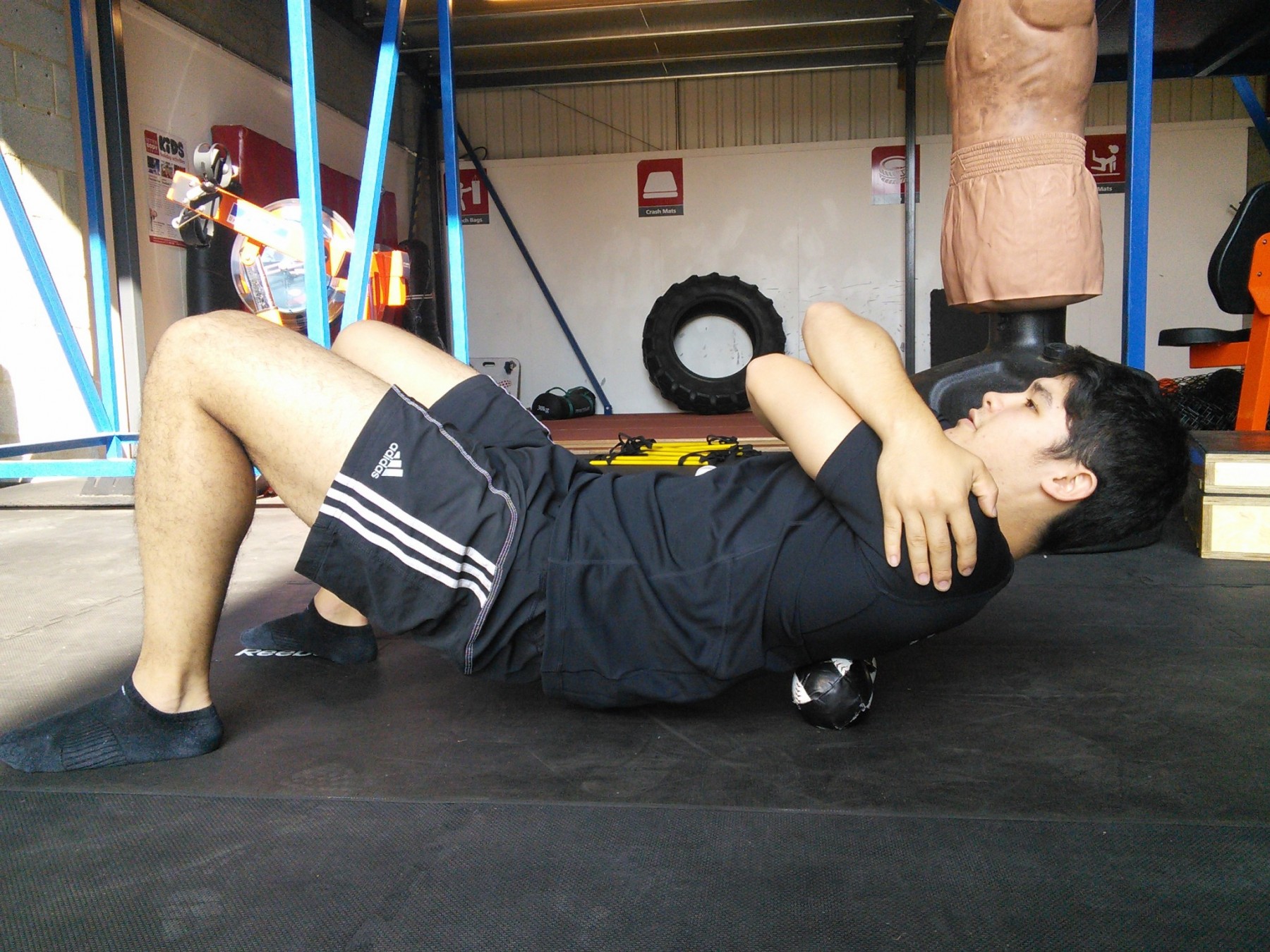
The tool being used here is what is known as a ‘peanut’ – essentially it is two softballs taped together. Place the peanut in the middle of the back and roll towards the neck. Any tight spots should be held in position to try and release the tension. Note that a foam roller can be used in place of the ‘peanut’.
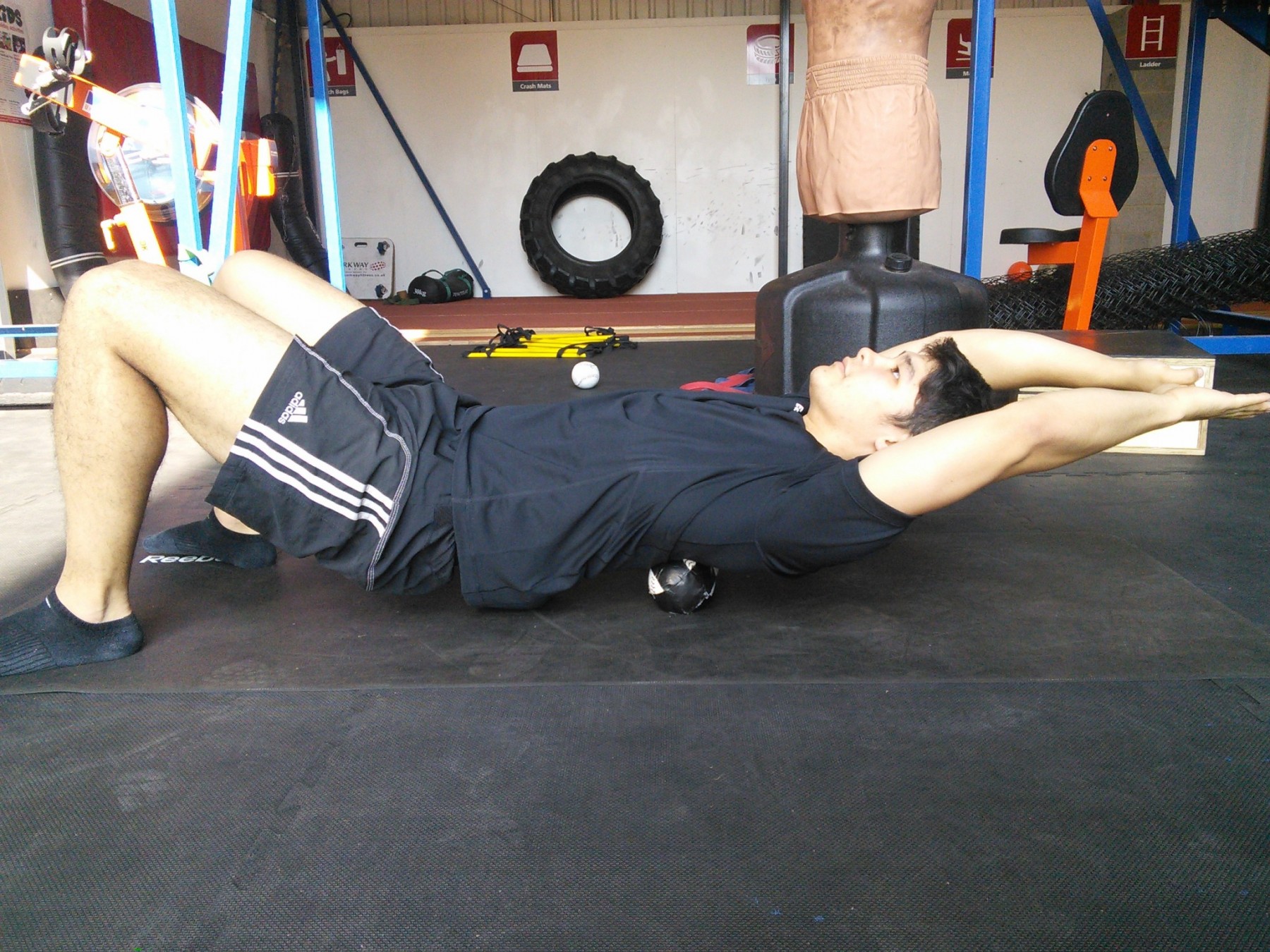
This is the same movement however the arms are held overhead – this will create extension of the thoracic, stretching it out so that it can be further ‘attacked’ by either the foam roller or the peanut.
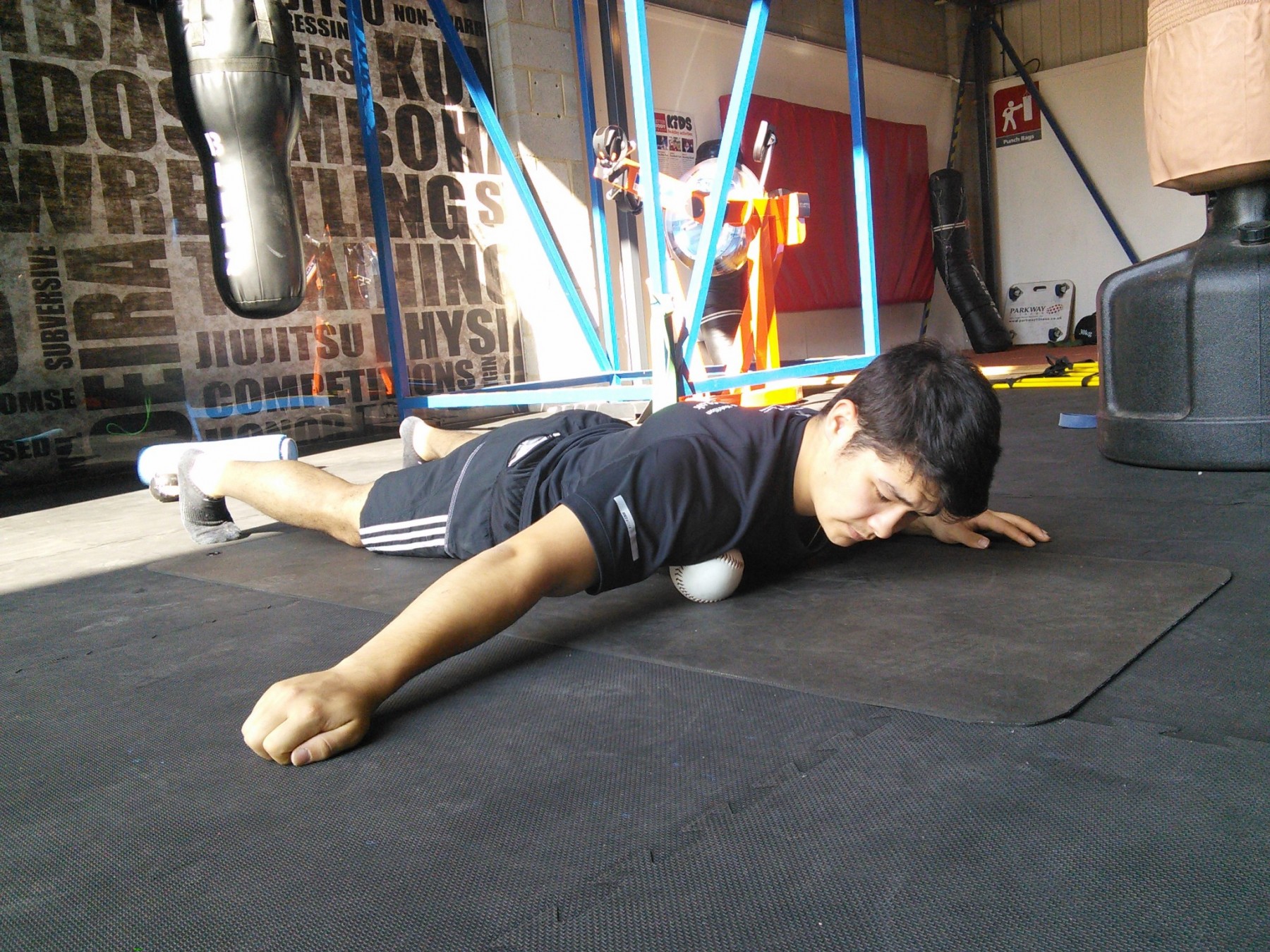
Tight chest muscles can roll the shoulder forward and during the squat this can mean a loss of upright body position. Use a softball to release the tension in these muscles before squatting.
This is what is known as a prisoner squat with banded resistance – if you struggle to maintain upright posture then this movement will help to increase the strength of the lower back stabilizer muscles. Place the band in the upper part of the back in order to create leverage to work against.

Mobility drills:
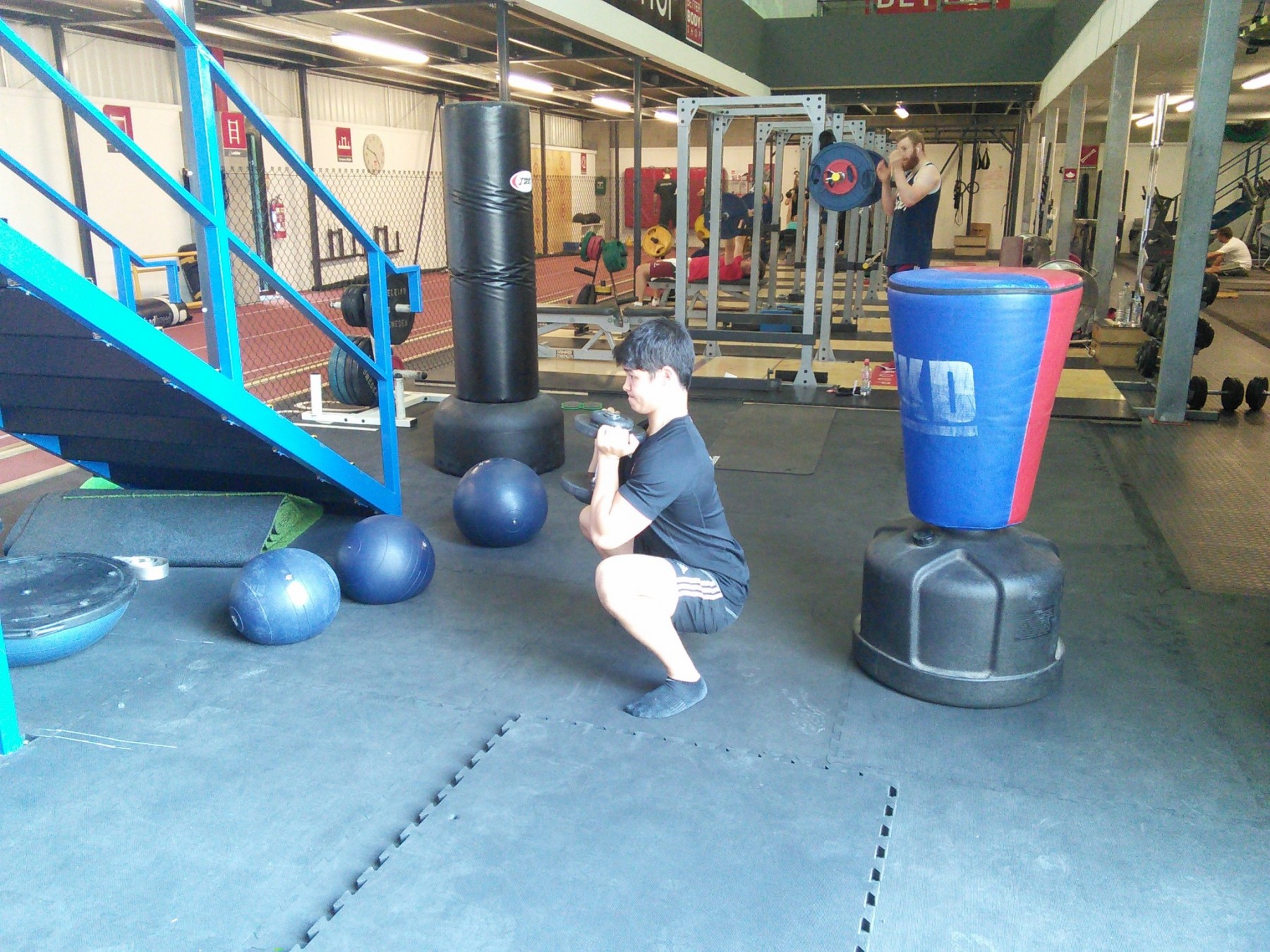
The Goblet squat is good way to add weight to the bottom position whilst maintain a flat back. Remember to pin the shoulders back during this movement.
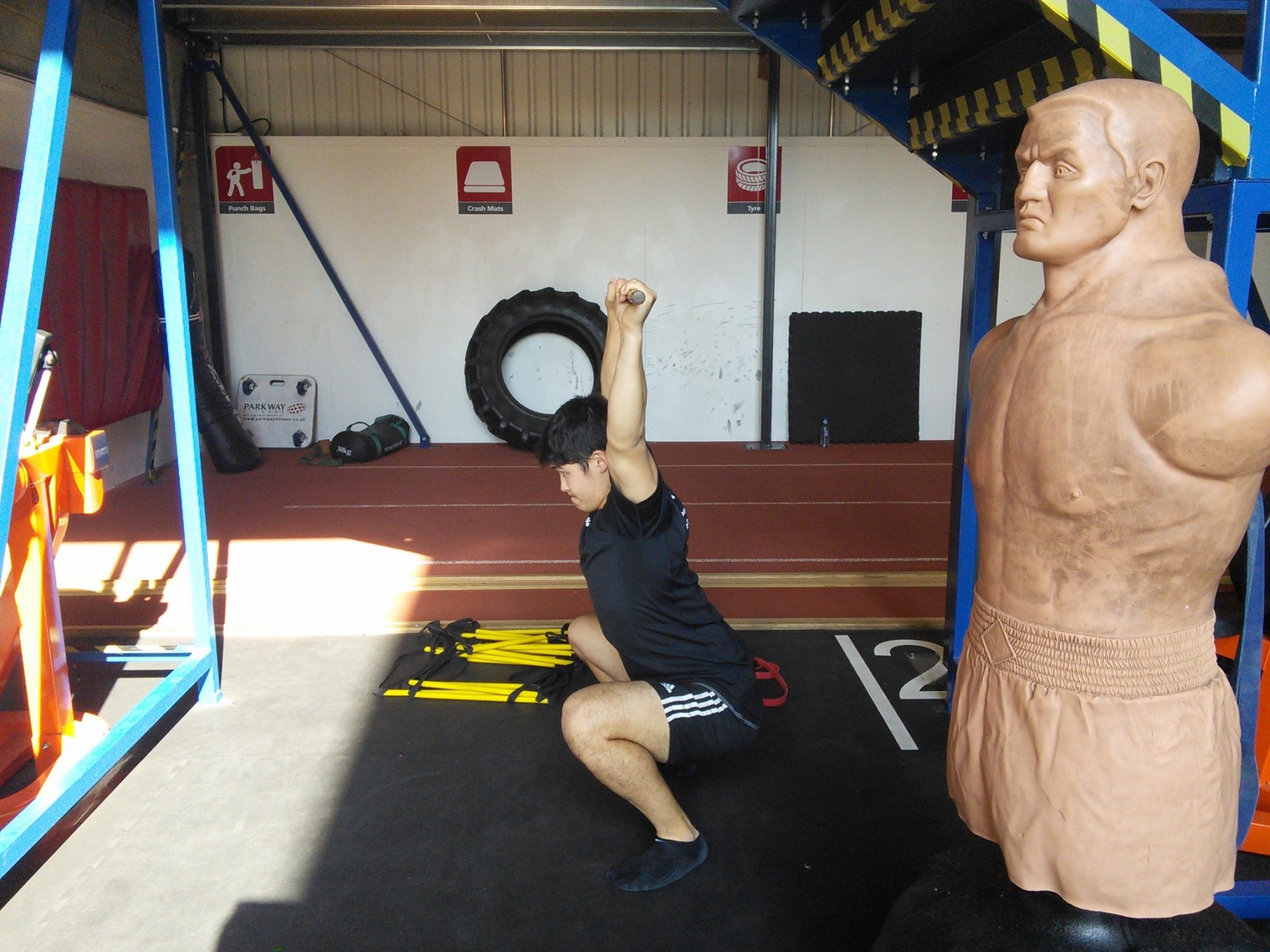
This is the overhead squat – hold a stick/dowel to achieve flexion at the shoulder and perform the squat whilst holding the stick as high as possible. Note that the mobility drills should be rhythmic in nature and fairly high reps (i.e. 20) and light in weight.
I hope this helps you to some degree. For any more information of SMR, stretching or just general training banter please give me a shout in the gym or call 01732 451 979
Eddie