

If you suffer from lower back pain regularly and you find it goes away, only to return again shortly afterwards, then perhaps your core stability is poor.
A majority of lower back pain is caused by the instability throughout segments of the spine and the stabilizing musculature surrounding the spine. Muscles such as the rotators and multifidus aggressively activate in response to poor joint-to-joint stability and create a feeling of tightness and discomfort/pain in the lower back. When this mechanism occurs, it is not advisable to start poking and prodding around the lower back with lacrosse balls and foam rollers. Instead, tackle the instability with exercise.
1. Plank

Lie down on the floor and come up onto tip toes and elbows. Draw the chin in to straighten your upper spine (C-Spine) and slightly tilt your hips up to straighten your lower spine (Lumbar spine). This centralises your spine from top to bottom.
Add an extra bit of tension through your midriff by sucking up the belly and trying to stop yourself from peeing.
Perform the plank for 4 sets of 30-50 seconds with 30 seconds rest between sets
2. Supine Heel Taps

Lie on your back with your knees tucked up at 90 degrees to your hip and shins horizontal to the ground. Suck your belly into the floor and make sure there is no space between the floor and your lower back.
Using one leg at a time, drop a heel to the floor and back up while the other leg stays in your start position.
Perform 3 sets of 10 reps on each leg with 30 seconds rest between sets
3. Glute Bridges
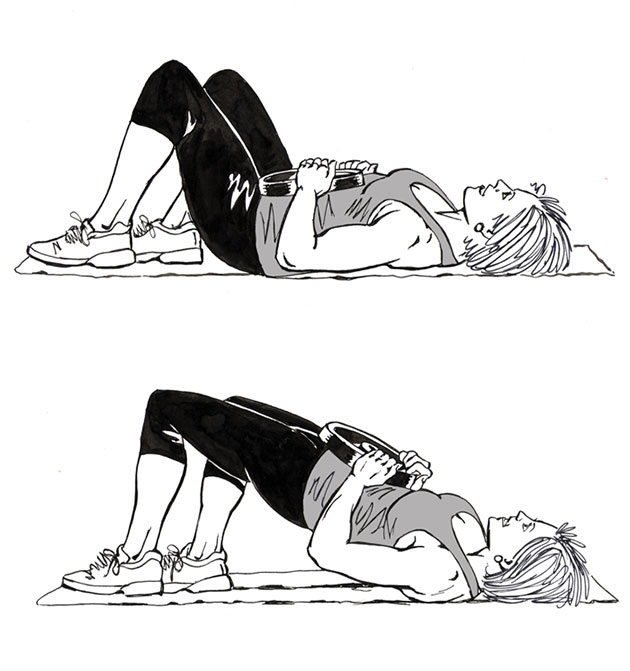
Lie on your back with knees bent and feet on the floor.
Starting with your hips/bum, peel them off the floor; then the lower back as well; then the mid back; then the upper back until only your feet and shoulders/head are in contact with the floor. The end point of the exercise should be when hips are straight (in line with knees and shoulders).
Reverse the exercise to come back down.
Perform 3 sets of 15 reps with 1 minutes rest between sets
4. Side Lying Clams
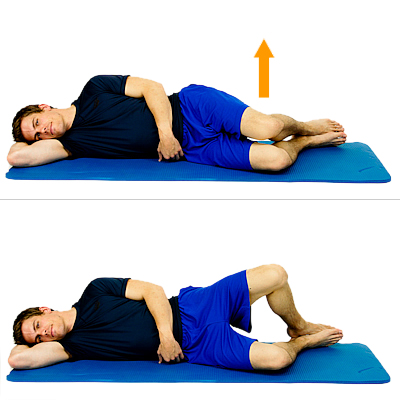
Lie on your side with heels tucked close to bum. Without the hips moving skyward, open the knees wide and control back down.
Perform 3 sets of 20 on each side with no rest.
Doing these exercises three times a week will assist in improving your core stability and hopefully aiding in your rehabilitation of your back pain.
Graham Ferris
Better Body Group, Sevenoaks