
Research has consistently shown that we as a nation are becoming more sedentary. This is because the majority of our working and home life’s involved a lot of sitting. With desk based work on the rise and the use of transport such as cars and trains it’s easy to see why. To make things worse unwinding after a hard day’s work for most people involves more sitting in front of the television.
This can have serious impact on our health with study’s showing increased risk of obesity, diabetes and heart disease with prolonged time spent on our bum. In fact a study published last year demonstrated that reducing the time spent sitting to less than 3 hours a day could add an extra 2 year on your life. I will leave the reference at the end if anyone wished to read more.
Not only does sitting all day reduce your life expectancy, sitting for prolonged periods of time can also reduce your quality of life leaving you with lower back pain poor posture and reduced flexibility. But it’s not all doom and gloom because in this blog I will explain what you need to do in the gym to counteract this.
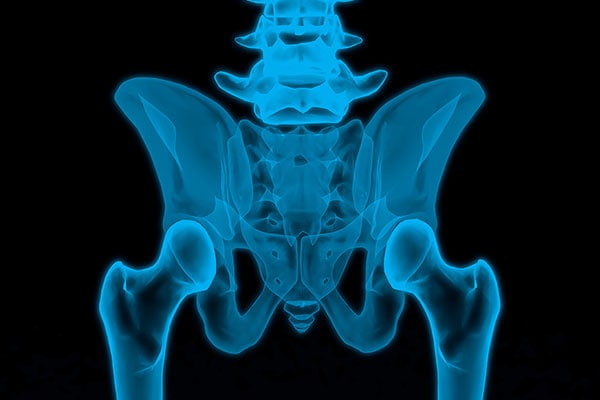
As mentioned above sitting for long periods of time can cause poor posture and reduced flexibility. This is because when you sit your hip flexors are placed in a shortened position with the glutes in a lengthened position. If we do this day after day the hip flexor will eventually become tight and the glutes will become lax and weak. This can force your body into a forward lean position messing up posture and reducing your range of movement.
This also can occur in other area of the body such as shoulders. When we sit hunched over a desk all day our pectorals are placed in a shortened position eventually causing the shoulder to be forced into an anterior tilt leaving you with hunched shoulders which can leave you with neck and shoulder pain.
Therefore Tip number 1 is stretch:
After a workout at the gym make sure that you dedicate specific time to stretch out your pectorals (chest), deltoids (shoulders) and hip flexors (hip) preventing reduced flexibility in these specific muscles forcing us into the poor positions mentioned above. Below are some good stretches to try.
Pectoral stretch 1:
- Place hand on the wall
- Rotate hand away from the wall
- Hold for 8+ seconds
- Perform 3 sets each side
Shoulder stretch:
- Lie on your side with scapula retracted back, this means that you want to lie on the ribs mainly and the outside side border scapula instead of lying flat on scapula
- Slide arm up to 90° level with your clavicle and then bend your elbow to 90°
- Bend knees to keep your body stable on your side
- Place the other hand just below the wrist and gently pull down towards the floor until you feel a stretch
- Hold for of 8+seconds
- Perform 3 sets each side
Hip stretch:
- Kneel on your left knee, cushioning your kneecap with a folded towel if you wish.
- Place your right foot in front of you, bending your knee
- Keep your back straight and abdominal muscles tight and push the hips forward.
- Slightly Lean forward, shifting more body weight onto your front leg and hold.
- Hold for 8+ seconds
- Preform 3 sets each side
Now we have dealt with the stretching lets deal with the exercises that you perform whilst at the gym. As mentioned earlier sitting all day puts your shoulders in a hunched position creating tight anterior muscles. This can be made worse by those who love to work the chest and shoulders more than anything else “you know who you are”. This can create muscle imbalances adding to the postural problem.
So Tip numbers 2 is: do more pulling
An easy way to deal with this is every push exercise that you do, perform a pulling exercise as well. For example if I perform a set of bench press I should perform a pulling exercise as well to prevent muscle imbalances being created and adding to the postural problem. This can prevent us looking like the guy below.

Another problem with sitting is inactivity of the gluteus. If we sit down all day our glutes will switch off and forget how to fire. This inactivity in the glues combined with tight hip flexors can lead to an anterior pelvic tilt placing stress on the lumbar spine resulting in lower back pain. This also has an effect on your energy expenditure because the glues are one of the biggest and strongest muscles in the body meaning that they use large amounts of energy. If we don’t use them then our energy expenditure will significantly reduce, making weight gain a lot easier.
So Tip number 3: do more squats
Study’s investigating the EMG activity during squats and hip hinges show huge motor recruitment in the gluteus maximum and hamstrings meaning that we can wake up our sleeping muscles using these exercises. This can prevent lower back pain and weight gain, “so get squatting”. My final tip is pretty simple and just common sense but it can easy be forgotten.
Finally Tip number 4: do more standing
If you can perform the exercise standing then stand up, you probably get enough sitting time at work or home so make the most of your opportunity to stand. For example instead of doing seated dumbbell press, stand up and do it, the same goes for bicep curls, don’t sit down, do it standing
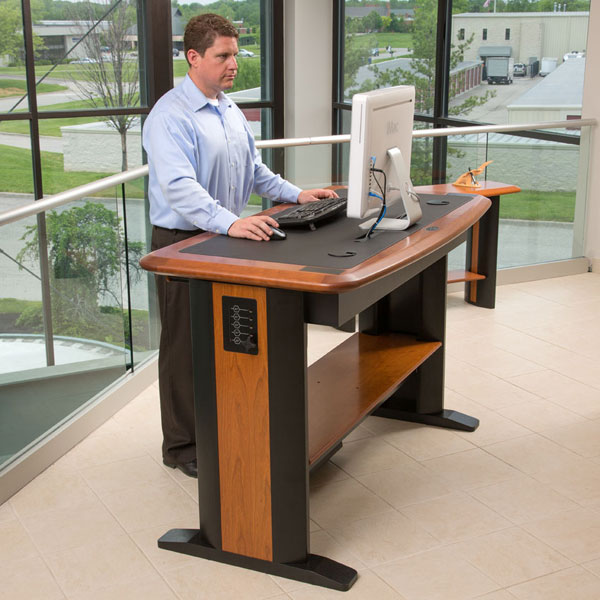
This can also apply to your working day. If possible stand up, getting a raised desk could be the answer, forcing you to stand whilst at work. This can have huge benefits on health and energy expenditure. research has shown that just standing up at work for an extra 3 hours a day can resulted in the equivalent energy expenditure as running ten marathons over the course of the year.
So get a higher desk!
As promised here is the reference and link to the study I was talking about:
Reference:
Katzmarzyk, P. T., & Lee, I. M. (2012). Sedentary behaviour and life expectancy in the USA: a cause-deleted life table analysis. BMJ open, 2(4).
Link: http://bmjopen.bmj.com/content/2/4/e000828.short?g=w_open_current_tab