

Have you signed up for a marathon this year? If not, why not?
Now couldn’t be a better time to set your goals for the year! So why not get motivated and sign up to run a marathon?! This will pave out your training for the winter months. Of course it’s daunting, but just think, the feeling when you cross that line and tick it off your bucket list, trust me when I tell you, it will be one of the best things you do.
In the UK there are 105 marathons each year including the ever-popular London Marathon, also The Brighton, The Loch Ness, Eden Project, and Bournemouth Marathon and many more. THERE’S NO EXCUSE!
To enjoy a marathon to the full, there are 3 important factors you need to think about:
– Training
– Diet
– Feet
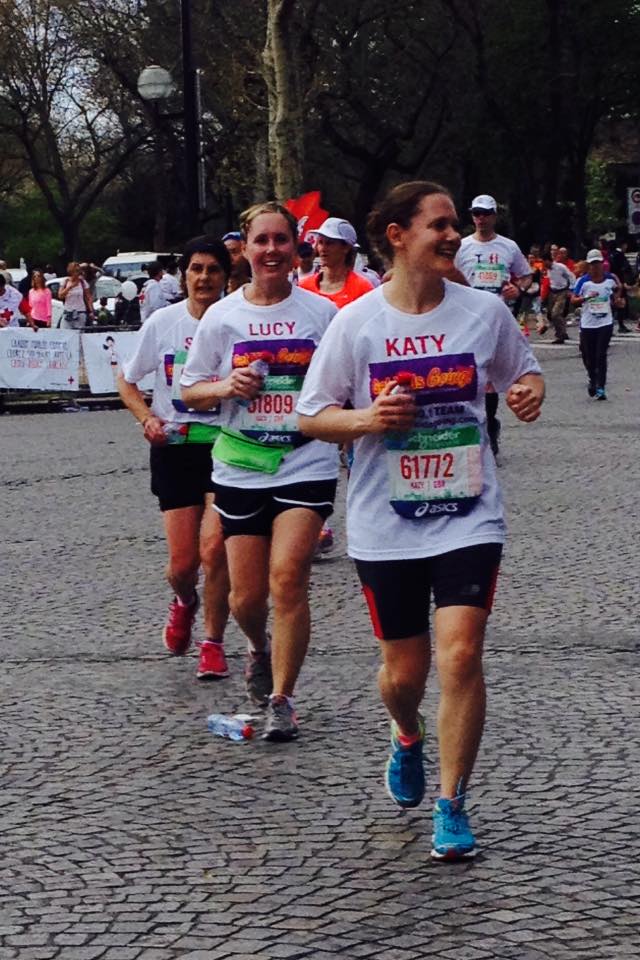
I’d like to share my experiences from the 5 marathons I have run so far.
Training:
It’s all about how much training you put in beforehand. This will determine your speed, time and your recovery.
If you’re a beginner to running then ideally training should start 5-6 months before the race, if you’re already a runner then 4-5 months will be enough to get the right amount of training in.
People get the impression when training for a marathon that it’s just about long boring, lonely runs, but this is definitely not the case. Here’s an example of what a weekly set of training sessions should consist of:
– One short fast run (interval, Hill repetitions, tempo runs)
– One middle distant run (10k) keep track of your time
– One long distant run (15+ miles)
– Two strength and condition training sessions
When completing your training runs do your best to try to avoid the treadmill, I would thoroughly recommend running on the roads/pavements. The reason for this is to try and replicate what to expect on the day, which of course can’t be predicted especially in the UK. But the point and advice I’m trying to get across is to run in the rain, the snow, the sun, the cold and all of the above combined, also to run different routes which have different inclines and declines etc.
Always complete a 20 mile run 3-4 weeks before the big day, this will help get your body and mind ready for the race. This is a must for your body, so it’s not such a shook to the system when you expect your body to run 26 miles. This will also help set your pace and mentally give you the confidence to perform on the day.
Strength and conditioning training is getting more and more popular with running and there is more science behind how important it is to add strength and conditioning training into your program. Strength training can help improve overall performance, adding heavy resistance exercise in particular, can make you faster and recover a lot quicker.
I ran my first marathon when I was 21, I did very little strength training and it took me a good 5 days to stop aching and stop walking like I’d been on a camel for a week! When training for my most recent marathon I introduced more strength training than I have before. I was strength training 2-3 times a week. The day after the marathon I was in zero pain, with no muscle soreness or feeling tired, my body had recovered well and I can only put this down to the change in my training program.
Diet:
If you’re training 5 times a week then listen to your body, you cannot be dieting when training for a marathon, you will just run yourself into the ground and lose muscle mass. On the other hand don’t think you can eat what you want. You will gain fat mass. This will result in unbalanced energy levels and could impact your training regime.
Eat a healthy balanced diet, protein for breakfast, complex carbs, protein, salad for lunch and protein, complex carbs with veg for dinner. For more nutrition advice come and see one of our nutritionists.
What to drink and eat when you’re running long distance?
Everyone is different, some people stick to just water others energy drinks, some people will eat jelly babies or bananas, none of these things are wrong it’s what suits you. The most important advice is whatever you choose, make sure you stick to it throughout your training and then carry out the same routine/habits on the day! Otherwise this could cause stomach upset, burn-outs and or an imbalanced mental state, amongst other things.
The same applies for the night before the marathon, you may have heard of ‘carb-loading’ which is to maximise the storage of glycogen (energy) in the muscles and liver. This is a must, but do NOT go overboard, I’ve done it myself and heard of lots of people carb-loading too much and being uncomfortable and bloated the next day. So eat the same carbohydrates as you do on a weekly basis just a little bit more 4 days leading up to the marathon.
It’s key to get the morning of the marathon right, once again practice this beforehand when completing your long runs. I’ve tried different breakfasts, porridge, peanut butter on toast, a couple of bananas. I found bananas work best for me! During the marathon I sip water every mile and Lucozade at mile 10 and 20, so far this strategy has saved me from hitting the wall and stopped me from taking unnecessary toilet stops.
Feet:
Running a marathon can cause all sorts of problems, one in particular and the obvious…your feet. You must get the right trainers for you. I’ve seen so many bad feet after a marathon, people with blisters, black toenails, and people finding it impossible to walk. These days trainers are so good you shouldn’t get blisters even with a new pair.
Here are FIVE top tips for healthy feet:
- Always get a good brand, go to a running shop as they will stock the best available trainers on the market.
- Always get a size bigger e.g. if you’re a size 5 always get a size 6, this will stop your big toe banging the top of the trainers as your feet hit the ground, this is what causes the toenail to go black and fall off.
- Always cut your toenails short.
- Always Vaseline your feet, this will stop friction building up from your socks/trainers and avoid any blisters. Vaseline is also good to put anywhere on the body which could rub e.g. in between your legs, under bra, nipples, pretty much anywhere which has the potential to rub.
- Wear good socks! If it rains you don’t want your sock slipping down and if it’s too hot you want your feet to breath and be sweat free as much as possible.
I would recommend a marathon to anyone, it’s well worth the pain and training, good luck to everyone who’s running this year and especially to Chris Wharton who is raising money for VICTA (Visually impaired children taking action) which supports children and young people who are blind or partially sighted and their families across the UK.
Lucy Sandhu