

In my time working at the Better Body Group, I have often been asked the question of which is a better exercise; the trap bar deadlift or the conventional deadlift. For the most part, people tend to lean towards the conventional deadlift as it is more technically challenging, and thus the better of the two lifts. Hopefully over the next few hundred words I will persuade you that this isn’t the case, and that there are some serious advantages to trap bar deadlifting.
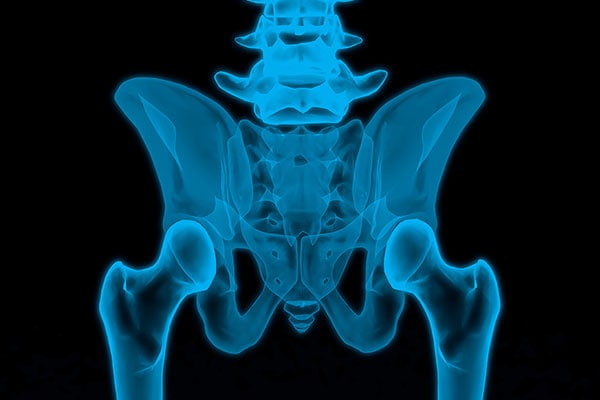
Let’s start by discussing the differences between the trap bar and the conventional deadlift I would like you to think about it as a continuum. At one end of this continuum you have knee dominant movements, which are primarily driven by the quadriceps to cause an increase and decrease of angle at the knee; an easy example to consider is a leg extension. At the other end of the continuum we have hip dominant movements which are driven by the muscles of the posterior chain (glutes and hamstrings) let’s take the Glute bridge at this end of the continuum. Now that we can visualise the continuum we can place the two deadlifts and understand how they have subtle differences.
The conventional deadlift is a very hip dominant movement, which results in a great demand being placed on the muscles of the posterior chain. On the other hand, we have the trap bar deadlift which allows us to get more forward knee movement, moving it slightly further towards the knee dominant side of the continuum. For a really simple analogy, you can consider the trap bar deadlift a hybrid of the squat and deadlift and thus it allows us to generate more force from our quadriceps during the lift. However, just because it places a little closer to the squat – don’t be fooled – it’s still predominately a hinge movement, and therefore the muscle groups being recruited are very similar to that of the conventional deadlift.
So, now we have established that the muscle recruitment is similar for both movements, you’re probably questioning why would we would choose the trap bar deadlift over the conventional?
Firstly, because it enables the user to quickly be able to learn and progress with the deadlift; and thus, is often used by beginners, which is most likely where the stigma comes from for it being an “easier lift”. But this really isn’t true as you can manipulate the intensity of the exercise via rep ranges or load, making it not only a great exercise but also incredibly challenging.
Below are the reasons why the trap bar deadlift has advantages over the conventional:
- The high handles can be advantageous for those with a reduced range of mobility at the hip; as it allows a person to perform a less flexion (bending) at the hip and be in a more upright position whilst still training the muscles of the posterior chain.
- The handles of the trap bar provide a neutral grip position which prevents the bar rolling in your hand like it does for the conventional deadlift, this means that when you are working towards your next personal best you won’t need to use an alternating grip or any lifting straps to help you keep hold of the bar, which in turn will help you focus on the actual challenge of the lift rather then keeping hold of the bar.
- The trap bar prevents hyperextending as you complete the lift, this is going to save the muscles in your lower back a whole load of work and will reduce the chances of getting soreness after a challenging deadlift training session.
So, as a recap:
- Trap bar recruits similar muscle to the deadlift.
- You can hold onto the bar a little easier.
- You can use a more upright position whilst recruiting quadriceps fibres which can reduce the work being placed on your lower back.
- It’s perfect for beginners and allows them to immediately focus on progress rather than needing to invest a lot of time focusing on technique.
That being said they are both excellent exercises that can form an integral part of any training program and should be performed correctly with appropriate instruction to ensure the exercise is being carried out efficiently to lower the risk of injury.