
Sitting is more dangerous than smoking, kills more people than HIV and is more treacherous than parachuting
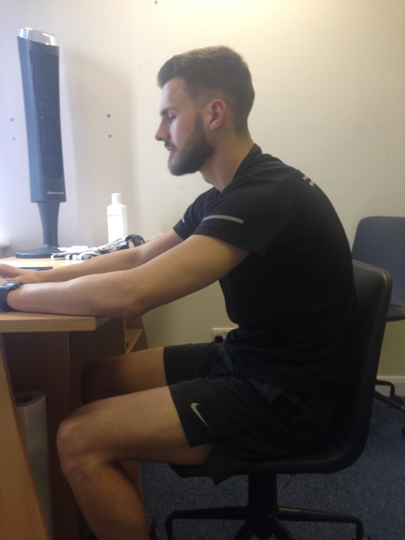
Lots of research has shown that sitting for at least 2 consecutive hours increases the risk of heart disease, diabetes, metabolic syndrome, cancer, back and neck pain as well as a whole host of orthopaedic issues.
The typical office worker has more musculo-skeletal injuries than any other industry sector worker, including construction & metal industry. Lifting heavy weights at work is as much an occupational hazard as sitting too much.
Inactivity through sitting has also lead to serious consequences in children also and with the rapidly rising number of TV’s and sitting during school, children are spending a scary amount of their waking hours inactive which is in direct correlation to an increase in childhood and adolescent obesity.
Why do we need good posture?
Good posture is the foundation upon which we build everything – lifting, walking, running, standing, climbing, squatting, hanging and carrying
So pretty damn important!
What makes up good posture?
That is a fantastic question glad you asked
The perfect standing posture goes as follows – centre line falls through the ear, shoulder, hip, knee and ankle. Head sits in neutral, shoulder blades sit flat against rib cage with a slight lordotic curvature at the cervical and lumbar spine. Like the figure above
How to fix and promote good posture and movement?
A good general rule of thumb is to stand up walk for 2 minutes every 30 minutes of sitting, take yourself through some gentle postural correction and have a walk around. This with negate the detrimental effects of sitting by realigning the spine and increasing your heart rate which will both improve posture and reduce risk of cardiovascular issues amongst a long list of positive effects walking and mobilising has on the body.
Here are some examples:
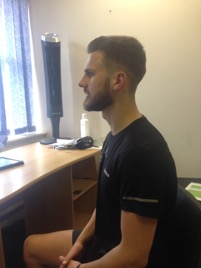
Chin tucks – left picture – poor head position causing excess stress on the neck and skull. Right picture tucking the chin, keeping head in the neutral position (i.e. straight) and tuck your chin towards you creating a double chin which helps realign the head and reduce excess stress on the neck which can lead to neck pain

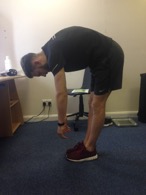
Jefferson curl – inactivity causes your hamstrings to become tight and probe to injury so stand upright with your feet together and slowly reach towards your toes (if you can’t reach your toes don’t worry, build up to it)
You should feel a lovely stretch down the lower back, back of the thighs and calf.
Go for 10 repetitions during your scheduled break and try and eventually touch your toes, you should be able to!
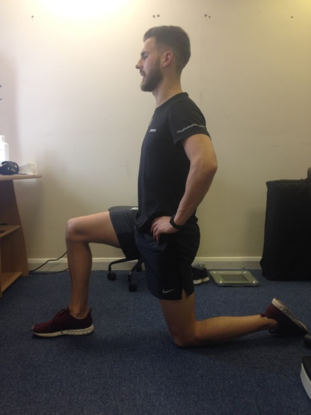
Hip flexor stretch – sitting for prolonged periods of time can cause your hip flexors to become very tight which over time leads to back pain
In a half knelt position keeping the torso upright squeeze the bum muscle on the leg that’s back as hard as you can and you should feel a pull down the front of the leg
Hold for 20s and repeat 2 times per leg.
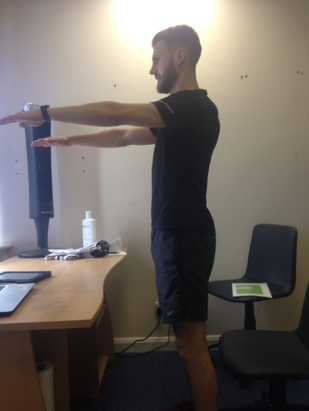
Desk squat – Switch those glutes back on!
Stand with your legs shoulder width apart and squat down to your chair, lightly touch your bum down and stand back up squeezing the bum as you go
Repeat 10 times per break.

If you would like any further information on how we can help you at the office and outside of it, then contact us today on 01732 451979.
James Allen
Exercise Specialist
Better Body Group, Sevenoaks